
A Guide to Understanding Modern Washing Machine Cycles
Let's be honest: your washing machine probably has more cycle options than you have clean socks. And half of them seem to take longer than a Netflix series. Why does a "quick wash" even exist if the normal cycle is going to run for two hours? And what's the difference between "cottons" and "synthetics" anyway?
If you've ever stood in front of your washing machine, utterly confused about which cycle to pick, you're not alone. Modern washing machines are brilliant pieces of technology, but they come with about as much intuitive design as a tax return form.
Here's the thing: once you understand what these cycles actually do, you'll save time, money, and probably a few favourite shirts. So let's break it down.

Why Are Modern Cycles So Long?
Remember when washing machines used to finish in 45 minutes? Those days are gone, and there's actually a good reason for it.
Modern washing machines use less water and less energy than older models. That's great for your electricity bill and the environment, but it means they need more time to get your clothes clean. Think of it like making a stew: you can't rush the process if you want good results.
Here's what happens during those long cycles:
The machine uses less water, so it needs more time to soak and agitate the clothes properly
It spins at different speeds throughout the cycle to clean more effectively
It pauses between stages to let the detergent work its magic
The "Eco" Paradox: The longest cycles are often the most "Eco" friendly. They use less water and lower temperatures but spend more time soaking and tumbling to get the dirt out.
Sensor Savvy: Most new machines (Samsung, LG, Defy) have sensors. If you put in a massive load of towels, the machine "weighs" it and adds time. If the clothes are extra thirsty (like cotton), it adds more water and time.
So yes, it takes longer. But you're using less electricity and water, which matters in South Africa where both are precious resources.
How Washing Machine Cycles Work
Each washing machine cycle controls the water temperature, wash time, spin speed, and agitation pattern. These factors work together to clean clothes effectively while protecting fabric quality. Understanding these elements helps you pick the best cycle for your laundry load.
Water temperature affects stain removal and fabric care. Hot water cleans heavily soiled items but can shrink or fade delicate fabrics. Cold water is fine for almost everything. Hot water is only necessary for bedding, towels, or serious stains (not protein stains like sweat and blood). Every time you choose hot, you're adding rands to your electricity bill.
Wash time determines how long clothes are agitated. Longer cycles remove tough stains but may wear out clothes faster.
Spin speed extracts water from clothes after washing. Higher speeds reduce drying time but can damage delicate items. For everyday stuff, medium spin (1000-1200 RPM) is the sweet spot. Delicates need low spin (600-800 RPM).
Agitation pattern varies between cycles to suit different fabric types and soil levels.
Extra rinse: Only use this if someone in your house has sensitive skin or allergies. Otherwise, you're wasting water.
Knowing what each cycle does helps you avoid common mistakes like using hot water on wool or over-spinning delicate garments.
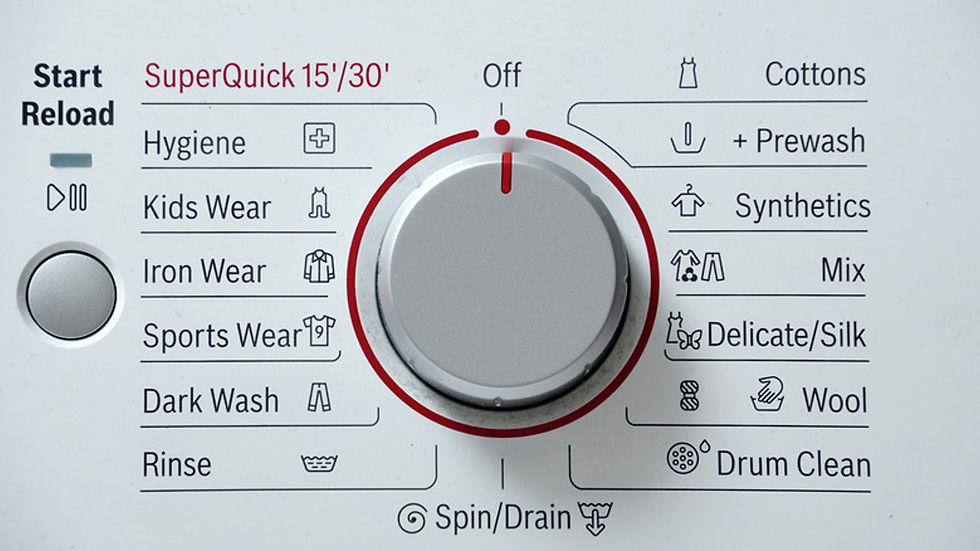
The Main Cycles: What They Actually Mean
Cottons (Normal/Regular)
What it does: This is your workhorse cycle. It uses hot water, aggressive agitation, and a high spin speed.
When to use it: Towels, bed sheets, jeans, sturdy cotton shirts, kitchen cloths, anything that can handle rough treatment.
Duration: Usually 2-3 hours (yes, really)
Avoid for: Delicate fabrics like silk or wool.
The catch: This cycle is thorough but harsh. Don't use it for delicate fabrics or anything with elastic. Your gym shirts will lose their shape fast.
Synthetics (Easy Care)
What it does: Gentler than cottons, with cooler water and a lower spin speed to prevent creasing.
When to use it: Anything made of polyester, nylon, or blended fabrics. Work shirts, sports gear, casual dresses, most of your everyday clothes.
Duration: About 1.5-2 hours
Avoid for: Delicate fabrics like silk or wool.
Why use it: This cycle prevents those annoying wrinkles that make your clothes look like you slept in them. Less ironing = winning at life.
Delicates / Gentle (Hand Wash)
What it does: Minimal agitation, cold water, very low spin speed. Basically, treats your clothes like they're made of glass.
When to use it: Lingerie, silk, wool, lace, anything with sequins or embellishments, that shirt you love but probably should hand wash.
Duration: 30-60 minutes
Avoid for: Heavy or very dirty items that need a stronger wash.
Pro tip: Use a mesh laundry bag for really delicate items. Your bras will thank you.
Quick Wash (Speed/Express)
What it does: A short, fast cycle that gets lightly soiled clothes reasonably clean.
When to use it: Clothes you wore for a few hours, items that just need freshening up, that shirt you need clean for tomorrow.
Duration: 15-30 minutes
Avoid for: Stained or heavily soiled laundry.
The Trap: It’s not meant for a full drum. If you cram 7kg of laundry into a 15-minute cycle, the clothes will come out soapy and soaking wet because the machine didn't have enough time to rinse or spin properly.
Detergent Tip: Use half the usual amount of detergent for quick washes to avoid that "slimy" feeling.
Reality check: Quick wash is not a miracle worker. It won't handle heavy stains, gym clothes, or anything that's actually dirty. It's for clothes that are worn but not filthy. Think of it as a refresh, not a deep clean.
Eco Mode (Energy Saver)
What it does: Uses less water and lower temperatures, but takes longer to compensate.
When to use it: Regular loads when you're not in a rush and want to save on electricity.
Duration: 3-4 hours (yes, even longer than normal)
Is it worth it? In South Africa with high electricity costs, absolutely. Run it overnight or when you're out for the day.
Rinse and Spin Cycle
What it does: This cycle rinses clothes and spins out water without washing. It is useful for removing detergent residue or refreshing clothes.
When to use it: Rinsing hand-washed clothes or extra rinsing for sensitive skin.
Avoid for: Dirty clothes needing a full wash.
A Practical Guide: What to Use When
Here's a simple breakdown to help you choose the right cycle:
Laundry Type | Best Cycle | Why |
Towels and bedding | Cottons (hot water) | Need thorough cleaning and can handle heat |
Work clothes, jeans | Synthetics or Cottons (warm) | Durable but benefit from less wrinkling |
Sports gear, activewear | Synthetics (cold) | Elastic fibers hate heat |
Shirts worn once | Quick wash | Just needs freshening, not deep cleaning |
Underwear, bras, delicates | Delicates (cold) | Preserves elastic and delicate fabrics |
Heavily soiled items | Cottons with pre-soak | Extra time loosens tough stains |
Common Mistakes
Using too much detergent: Modern machines need way less than you think. More soap doesn't mean cleaner clothes. It means residue buildup and potentially smelly machines.
Overloading: Your machine needs room for clothes to move. If you're cramming everything in, nothing gets properly clean. A good rule: fill the drum about 3/4 full, loosely packed.
Leaving wet clothes in the machine: Even for an hour or two, especially in humid weather, this causes that sour smell. Set a timer on your phone if you need to.
Washing everything on hot: Unless it's bedding or towels, cold water works fine and saves a fortune on electricity.
The South African Context: Loadshedding & Water
We have unique challenges here, and our laundry habits should reflect that:
The "Time Delay" Feature: If you know loadshedding is hitting at 10:00 AM, use the "Delay End" button to make sure the machine finishes at 09:30 AM. There's nothing worse than laundry sitting in stagnant water for two hours of "Stage 4."
Cold is Gold: Most modern detergents (like OMO or Ariel) are designed to work at 30°C. Skipping the heater saves a massive amount of electricity—and prevents your favourite jeans from shrinking.
Spin Only: If the power cuts mid-rinse, use the "Spin Only" cycle once the lights come back on to get the excess water out before hanging.

A simple rule of thumb
If you are unsure which cycle to choose, ask yourself:
Is the load small and lightly worn? Quick wash
Is it everyday clothing or school wear? Normal or Cotton
Is it about saving electricity, not time? Eco
Is it delicate or expensive fabric? Delicates
Is it really dirty or smelly? Heavy Duty
Understanding Washing Machine Cycles Demystified Helps You Save Time and Money
You don't need to use every cycle on your machine. Most people can get by perfectly well with:
Quick wash for lightly worn clothes
Cotton for towels and bedding
Delicates for nice stuff
Heavy duty when things are genuinely filthy
The two-hour cycles seem ridiculous until you remember they're saving you hundreds of rands on electricity and helping manage water usage. Run them overnight or while you're out, and suddenly that time doesn't matter.
Your washing machine isn't complicated. It just has options you'll rarely need. Stick to the basics, use cold water when you can, and don't overthink it.
And if you're still confused? Quick wash is almost always the right answer.


Comments